
Homegrown vs Commercial Cannabis: Why Your Jar Can Win

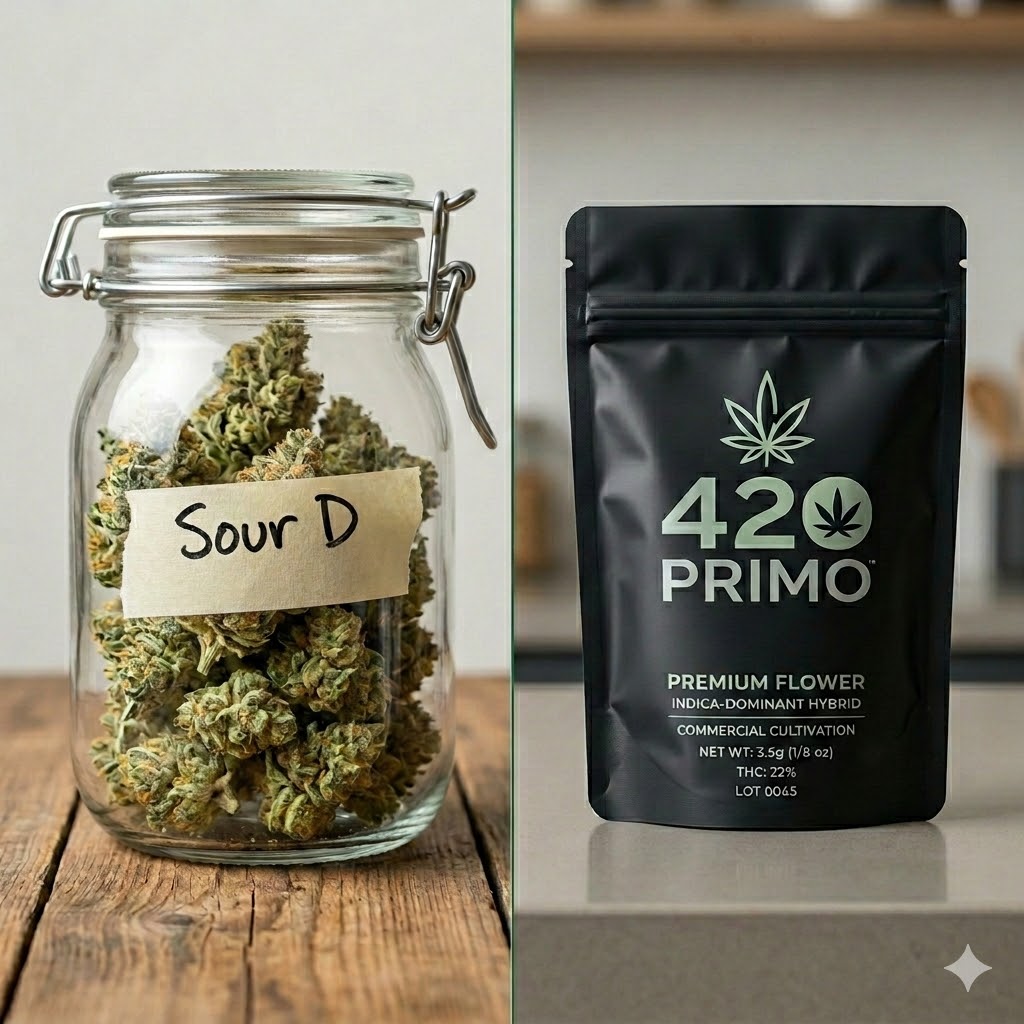
Commercial growers have to make decisions around speed, space, labor, and profit. Home growers get to make decisions around quality.
- Commercial growers often choose fast plants because faster harvests keep the business moving.
- Home growers can train bigger plants, wait longer, and chase better flavor and effects.
- Trimming, curing, and harvest timing can make or break the final flower.
Most growers have had this moment.
You open a jar of homegrown, take one smell, and think, “Man, this is better than half the dispensary weed at the shop.”
And you’re not crazy.
The Real Difference Between Homegrown vs Commercial Cannabis
When you look at homegrown vs commercial cannabis, the difference usually comes down to priorities.
A commercial grow has to keep the machine moving. Plants come in. Plants go out. Rooms flip. Pounds get processed. Labor has to be managed. Bills have to get paid.
That doesn’t mean every commercial grow is bad. There are plenty of good commercial growers out there. But the system they’re growing inside is built for efficiency.
A home grow is different. You’re not trying to feed a whole production schedule. You’re trying to grow flower you’re proud to smoke, share, and show off. That focus on cannabis quality changes everything.

Why Do Commercial Growers Pick Faster Cannabis Genetics?
Commercial growers don’t usually pick cannabis genetics the same way home growers do. They’re thinking about things like:
- How fast does it finish?
- How much does it yield?
- How tall does it get?
- How easy is it to keep consistent?
- How well does it move through the system?
That’s why you see so many indica-dominant or hybrid plants in commercial setups. They’re usually quicker, more compact, and easier to manage in big rooms. Fast-finishing strains mean more harvests per year, and more harvests mean more product to sell. That’s just the business side of it.
But here’s where it gets interesting for the home grower. Some of the best flavors, weirdest terp profiles, and most interesting effects don’t always come from the fastest plants. Longer-flowering sativas and those energetic, electric buzz strains can be a pain for commercial growers. They take longer, stretch more, and can be harder to keep uniform. They might not make sense when you’re trying to run a tight production schedule.
But at home? You can grow them because you want to. You can chase that old-school haze effect. You can grow something fruity, funky, loud, strange, or personal. You can pick cannabis genetics based on the kind of flower you actually want in your jar. That’s a big advantage.
Commercial growers often have to ask, “Will this make financial sense?” Home growers get to ask, “Do I want to smoke this?” That one question changes the whole grow.
Is the Sea Of Green Method Better For Homegrown Cannabis?
A lot of commercial grows are built around efficiency per square foot. That’s where the Sea of Green method comes in.
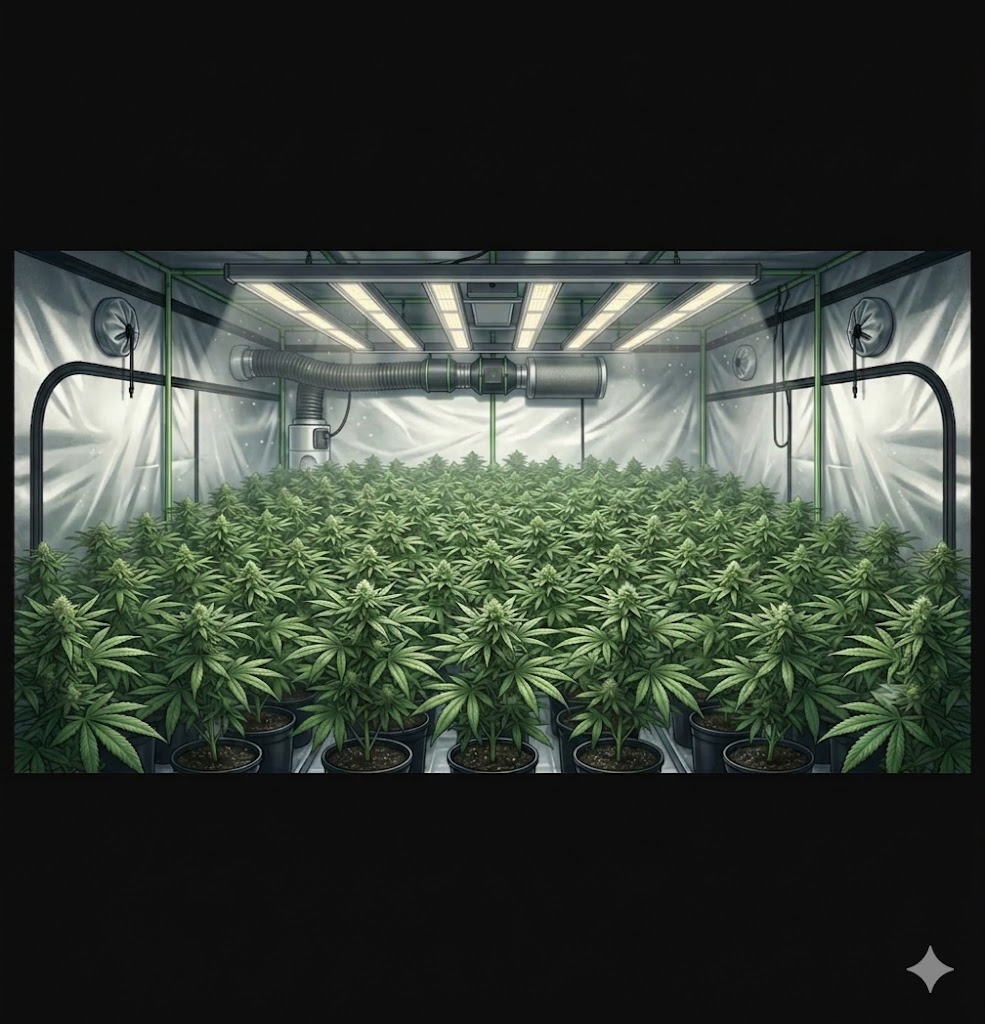
Sea of Green usually means running a lot of smaller plants, flipping them into flower quickly, and keeping the canopy packed. The goal is to cut down veg time, save electricity, and move more plants through the room. For a commercial setup, that can make sense. You’re trying to fill space fast, keep harvests moving, and get the most production out of every square foot.
But that doesn’t mean it’s the best setup for a home grower. Most home growers aren’t working with unlimited plant counts. A lot of growers have legal limits. Some only get a handful of plants. If you only get a few plants, you probably don’t want to treat them like disposable little units in a production line. You want to make each one count.
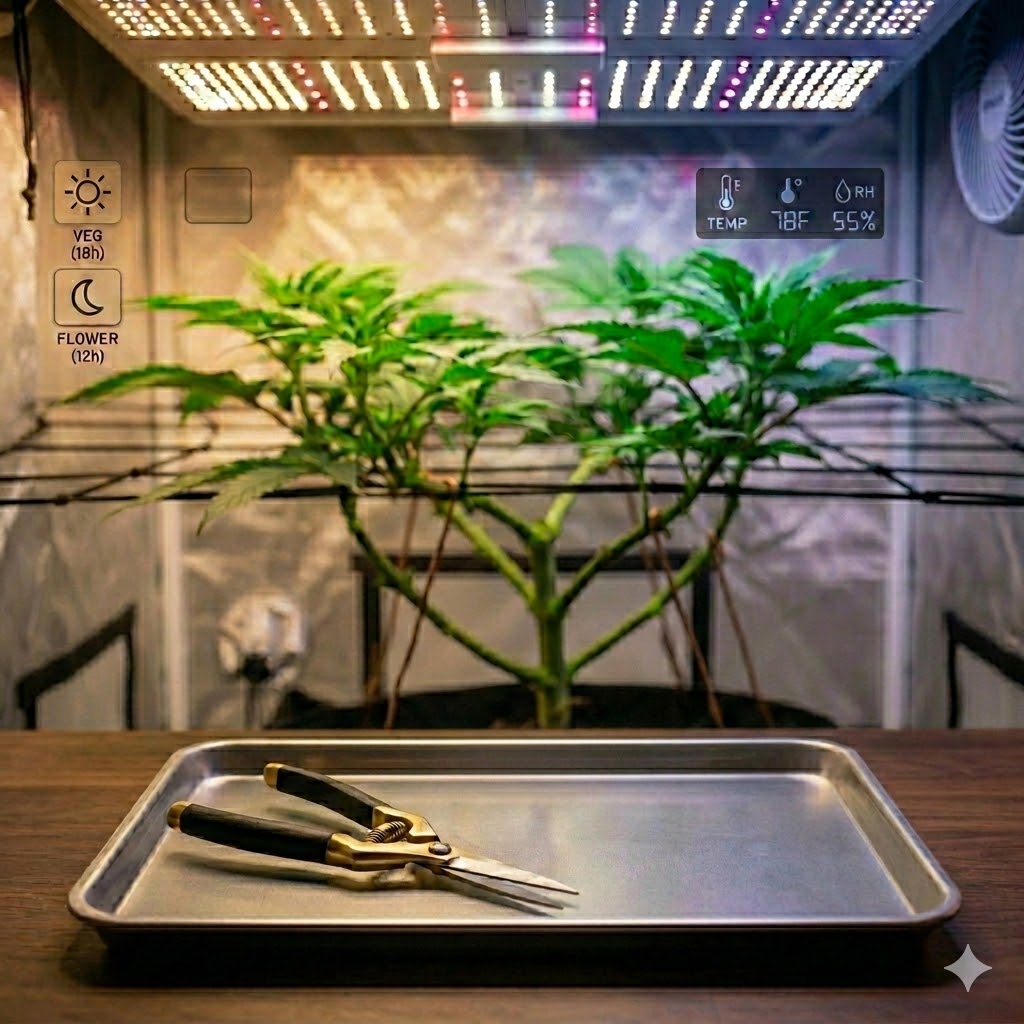
That’s where training and shaping come in. You can veg a little longer. Top the plant. Bend branches. Open up the middle. Build a wide, even canopy. Instead of packing a bunch of tiny plants under the light, you can shape fewer plants into bigger, stronger producers.
That gives you more control, better light spread, better airflow, and better bud development across the canopy. And honestly, it teaches you more as a grower. You start seeing how the plant responds and learn how to guide it instead of just rushing it.
The Sea of Green method can work, but it’s not always simple. It can also mean more irrigation complexity, more plants to manage, and more timing pressure. For a home grower, bigger trained plants often make more sense. You’re not trying to win a factory efficiency contest. You’re trying to grow the best flower you can with the space and plant count you’ve got.
Why Does Post-Harvest Processing Hurt Commercial Cannabis Quality?
A lot of growers focus so much on the grow that they forget how much quality can be lost during post-harvest processing. But post-harvest is huge.
Commercial facilities may have hundreds of pounds to process. That flower has to get trimmed, dried, sorted, bagged, and moved. That’s a lot of work. So they look for speed.
Machine trimming is one of the big ones. It saves time, no doubt about it. But it can also beat up the flower. When comparing machine trimming vs hand trimming, a machine trimmer can knock off trichomes, shave the outside of the bud, and make everything look a little too tight and rounded. Sometimes the flower comes out looking less like a living plant and more like it got polished in a tumbler. That hurts bag appeal, it can hurt the smell, and it can knock away some of the good stuff you spent months growing.
Hand trimming takes longer, but it’s gentler. You can protect the frost, keep the bud structure looking natural, and make better judgment calls as you go. That matters.
Then there’s curing. A real cure takes patience. You’re letting moisture even out, letting the flower settle, and giving the smell and smoke a chance to improve. But in a commercial setup, curing can turn into “get it bagged and get it stored.” Again, that doesn’t mean every commercial grow handles it poorly. But when you’re dealing with big volume, speed becomes a real pressure.
At home, you don’t have to rush it like that. You can dry slower, trim carefully, and cure with attention. You can open the jar and actually notice what’s happening. That’s one of the biggest reasons homegrown cannabis quality can be so good. You have the time to protect the flower all the way to the finish line.
Why Does Harvest Timing Matter For Cannabis Quality?
Here’s another thing commercial growers deal with: schedules.
In a commercial grow, the next round is always coming. New plants need the room. Old plants have to come down. Workers are scheduled. Processing is planned. Everything is tied to timing. So sometimes plants get harvested because the calendar says it’s time, not because the plant is perfectly ready.
That can make a real difference. A home grower has more freedom regarding harvest timing. You can check trichomes. You can watch how the plant is finishing. You can give it a few more days if it needs them. If the plant got stressed, you can let it recover. If the tops are close but not quite there, you can wait.
That patience can show up in the final flower with better maturity, better smell, better effect, and better overall quality. This is where home growing gets fun. You’re not just following a schedule; you’re reading the plant. And once you start doing that, you become a better grower fast.

What Makes Homegrown Cannabis Different From Commercial Cannabis?
When people compare homegrown vs commercial cannabis, they usually talk about quality like it’s some mystery. It’s not that mysterious.
Commercial growers are often making decisions around speed, space, labor, and consistency. Home growers can make decisions around flavor, effect, timing, and pride. That’s the difference.
You can run genetics that take longer. You can train fewer plants into a better canopy. You can trim by hand. You can cure with care. You can wait until the plant is actually ready.
None of that means home growing is automatically better—you still have to do the basics right. But when you do, homegrown can absolutely hold its own against commercial flower. And in a lot of cases, it can beat it. Because you’re not growing for a production schedule. You’re growing for the jar.
Why do commercial growers use fast-finishing cannabis strains?
Fast-finishing strains let commercial growers harvest more often, keep rooms moving, and manage production costs. Home growers can choose slower genetics when flavor, effect, or personal preference matters more than speed.
Is Sea of Green a good method for home growers?
Sea of Green can work, but it usually makes more sense for commercial efficiency than small home grows. Many home growers do better with fewer trained plants, especially when plant count limits matter.
Why can machine-trimmed cannabis lose quality?
Machine trimming saves labor, but it can knock off trichomes, damage bud structure, and make flower look overly tight. Hand trimming takes longer, but it helps protect smell, frost, and bag appeal.
Why does harvest timing affect cannabis quality?
Harvest timing affects maturity, smell, and effect. Commercial growers may need to harvest on a schedule, while home growers can wait for the plant and trichomes to show they’re fully ready.
Is homegrown cannabis always better than commercial cannabis?
No. Homegrown cannabis still depends on good basics. But when a home grower has solid genetics, healthy plants, careful trimming, and patient curing, homegrown can beat commercial flower.
What is the biggest difference between homegrown vs commercial cannabis?
The biggest difference is priority. Commercial cannabis is often grown around speed, space, labor, and consistency. Homegrown cannabis can be grown around flavor, effect, harvest timing, and quality.


Responses