
The latest wave of anti cannabis propaganda disguised as “Science” is just gross

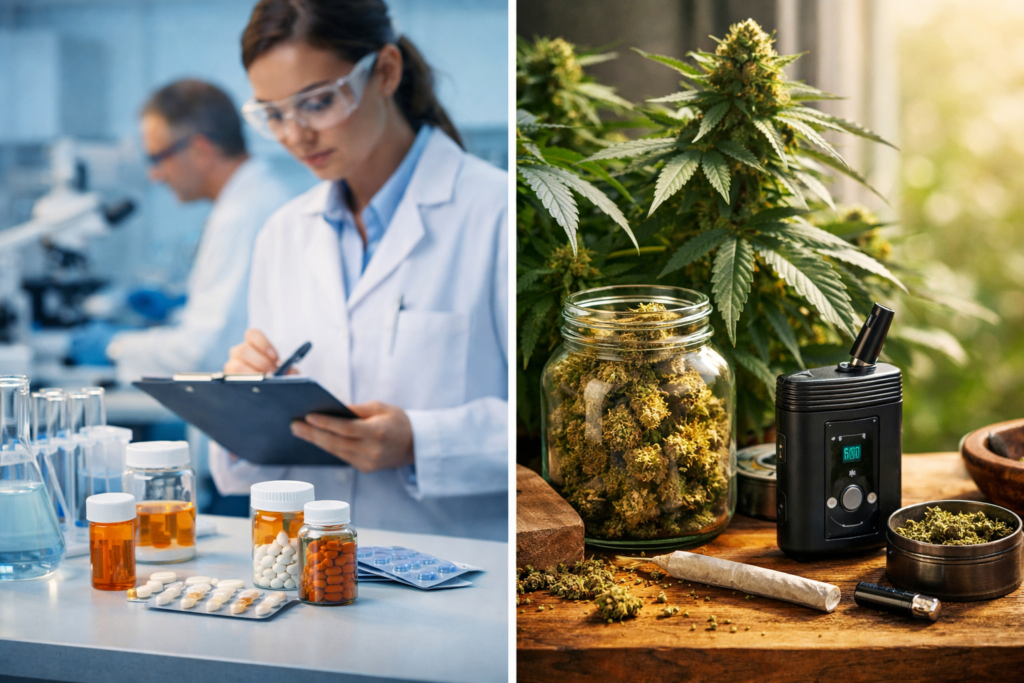
The Lancet Said Cannabis Doesn’t Work. Here’s Why That’s Garbage Science.
By Scotty Real | March 2026
“No evidence” is not the same as “doesn’t work.” One means a medicine failed rigorous testing. The other means the testing was never done — or was done wrong. This study is the second thing.”
A new study is blowing up across every mainstream news outlet right now, and the headline is the same everywhere you look: “Cannabis shows little benefit for most mental health disorders.”
CNN ran it. Reuters ran it. The Guardian ran it. NPR ran it. Dozens of local stations picked it up within hours of each other, all with nearly identical framing, all landing on the same conclusion.
Before you let that headline sink in and start second-guessing what you, or someone you love, has experienced firsthand with this plant, you need to understand what this study actually looked at. And more importantly, what it didn’t.
Because the gap between those two things is enormous.
WHO DID THIS STUDY?
The research was led by Dr. Jack Wilson, a postdoctoral fellow at the Matilda Centre for Research in Mental Health and Substance Use at the University of Sydney in Australia. It was published in The Lancet Psychiatry on March 16, 2026.
To be clear: we’re not calling Dr. Wilson a pharma shill. His financial disclosures show no industry ties. The Matilda Centre is an academic research institution, not a rehab lobby. The study was funded by Australia’s National Health and Medical Research Council, government money, not pharmaceutical money.
So what’s the problem?
The problem is the science itself. And several prominent cannabis researchers, people who have dedicated their careers to this plant, are saying the same thing.
“NO EVIDENCE” IS NOT THE SAME AS “DOESN’T WORK”
This is the single most important thing in this entire article, so we’re putting it up front.
In a meta-analysis like this one, “no evidence” has a specific technical meaning: we didn’t find enough qualifying studies using our specific criteria to draw a conclusion.
It does not mean: we studied this rigorously and it failed.
It does not mean: this treatment doesn’t work.
It means: the research either wasn’t done, or the research that exists didn’t fit our requirements.
For depression, the researchers found zero randomized controlled trials evaluating cannabinoids. Not a small number. Zero. And yet the headline says cannabis doesn’t work for depression. You cannot conclude a medicine doesn’t work when you haven’t studied it. That’s not science. That’s an absence of science being weaponized as a conclusion.
The researchers reviewed 54 randomized clinical trials conducted between 1980 and May 2025 involving just 2,477 participants total across conditions including anxiety, PTSD, depression, opioid use disorder, psychotic disorders, autism, insomnia, and Tourette’s. When you spread 2,477 people across that many conditions, over 45 years, using wildly different products and methods, you don’t have a conclusion. You have a data gap.
WHAT THE STUDY ACTUALLY FOUND: THE BURIED GOOD NEWS
Before we get into the methodology problems, here’s something the headlines buried under the “doesn’t work” framing. The study actually found evidence that cannabis does help with several conditions. They just didn’t lead with that.
Opioid and cannabis withdrawal: Cannabis (specifically CBD combined with THC) was associated with reduced opiate withdrawal symptoms and lower consumption in people dealing with opiate use disorder. That’s the plant helping people taper off the opiates. The mechanism is real.
Tourette’s syndrome: Cannabinoids were associated with meaningful reductions in tic severity. For people living with Tourette’s who have exhausted pharmaceutical options, many of which carry serious side effect profiles, this is not a minor finding.
Autism spectrum disorder: The study found a reduction in certain autistic traits in people treated with cannabinoids. Wilson cautioned that there is no universal experience of autism and the evidence quality was low, but the signal was there. Families who have been using cannabis for their kids with autism didn’t imagine what they observed.
Insomnia: Cannabis was linked to increased sleep time in patients with insomnia. Given that insomnia is one of the most common reasons people use cannabis, and that the pharmaceutical alternatives (Ambien, benzodiazepines) carry serious addiction and dependency risks, a natural sleep aid that actually increases sleep time is a major finding. It got a paragraph. The “doesn’t work” framing got the headline.
These aren’t minor footnotes. These are conditions that affect millions of people who have been let down by conventional pharmaceutical options. The fact that a “cannabis doesn’t work” study buried evidence that it does work for these conditions should tell you something about how the narrative is being shaped.
THE METHODOLOGY PROBLEMS ARE ENORMOUS
Problem 1: Most of These Studies Tested Pharmaceutical Isolates, Not Real Cannabis
Dr. Wilson himself admitted this in interviews. The cannabis medicines used in these trials were “largely oral formulations such as capsules, sprays, or oils.”
We’re talking about Marinol, a synthetic THC capsule approved back in 1985. Nabilone, a synthetic THC analog. Nabiximols (Sativex), a standardized pharmaceutical spray. Isolated pharmaceutical CBD.
These are not cannabis. Marinol is a synthetic molecule in a capsule. It has no terpenes. No minor cannabinoids. No CBG, CBN, or CBC. No entourage effect. No interaction between compounds that researchers now understand is central to how the plant works in the body.
Lumping Marinol trials into a study about “does cannabis work” is like studying white bread and declaring that wheat doesn’t nourish people. The active components are there, stripped of everything that makes them function as a whole system.
This is not a minor technical complaint. The entourage effect, the interaction between cannabinoids, terpenes, and flavonoids in the whole plant, is now one of the most studied mechanisms in cannabis science. Most of the trials in this review were designed before that understanding existed, using products that specifically eliminate the variables that make whole-plant cannabis work differently than isolates.
Problem 2: They’re Reviewing 45 Years of a Completely Different Plant
The oldest studies in this review go back to 1980. Cannabis in 1980 was not the medicine being used today.
Average THC content in the 1970s and 80s? Roughly 4%. Today’s cultivars regularly test at 20-30%+ THC, and that’s before you get into concentrates, which can hit 70-80%. The genetic sophistication of modern cultivars, the understanding of specific cannabinoid profiles for specific conditions, and the precision of modern extraction methods are all completely absent from studies designed and conducted in a different era with a fundamentally different plant.
More importantly, our entire scientific understanding of the endocannabinoid system was built after most of these studies were designed. The ECS wasn’t properly characterized until the 1990s. CB1 and CB2 receptors, the system those receptors regulate, the role of endogenous cannabinoids in mood, sleep, pain, and immune function: none of that was understood when the oldest studies in this review were designed.
You’re evaluating modern medicine using a research framework built before the medicine’s mechanism of action was understood. That’s not a valid comparison.
Problem 3: The Way People Actually Use Cannabis Was Almost Never Studied
This might be the most glaring problem of all, and Wilson acknowledged it directly. The study mostly tested oral formulations administered in clinical settings under supervision. Capsules. Sprays. Oils.
In the real world, people smoke it. They vaporize it. They consume live rosin, full-spectrum concentrates, and whole flower, often in their own homes, self-titrating doses based on how they feel that day, using cultivars selected for specific cannabinoid and terpene profiles.
Wilson said it himself: “In real life, people typically use smoked cannabis, and there is even less evidence of its effectiveness for mental health.”
Translation: we mostly studied a delivery method that real-world patients don’t use, in clinical settings that don’t reflect how people actually consume cannabis, and then concluded that the medicine doesn’t work for those patients.
There are essentially zero randomized controlled trials studying whether someone smoking a high-myrcene, balanced THC/CBD cultivar in their home helps them sleep, manage their PTSD, or wean off opioids. That research has never been done at scale. The absence of that research is being called evidence of failure.
Problem 4: Studies That Showed Benefits Were Excluded By Design
This one should make you furious.
Dr. Ryan Vandrey, a professor of psychiatry and behavioral sciences at Johns Hopkins University who has spent his career studying cannabis, said publicly that several studies he was personally involved in that showed significant clinical benefits for anxiety and depression were excluded from the Lancet analysis because they didn’t meet the inclusion criteria.
Read that again. Studies showing cannabis working were thrown out, not because they were bad science, but because they used study designs the reviewers didn’t accept.
“It’s embarrassing how little we have done in terms of data collection, given how widely this is available as a therapeutic.”— Dr. Ryan Vandrey, Professor of Psychiatry, Johns Hopkins University School of Medicine
Vandrey continued: the review inevitably collapses data from different products, doses, routes of administration, and patient populations, and it excludes findings from long-term observational studies and other sources of evidence. “So it can be challenging to draw firm conclusions, especially when there’s not that many actual studies or patients being evaluated.”
Problem 5: The Review Collapses Everything Into One Pile
Dr. Ziva Cooper, who directs the UCLA Center for Cannabis and Cannabinoids, made the same point from a different angle.
“Cannabis can have vastly different physiological effects depending on the compound. The review highlights that cannabinoids as a whole haven’t been shown to be helpful for anxiety, but the picture changes significantly when you look at specific compounds like CBD individually.”— Dr. Ziva Cooper, Director, UCLA Center for Cannabis and Cannabinoids
She added that researchers should “be open to integrating other types of data that aren’t necessarily from placebo-controlled studies.”
In other words: one of the leading cannabis scientists at UCLA is saying the methodology is too narrow, excludes promising data, and lumps together compounds that have fundamentally different effects as if they were the same medicine.
THE OPIOID CRISIS ANGLE NOBODY IS TALKING ABOUT
The study says cannabis doesn’t work for opioid use disorder. This is the finding that hit our community the hardest.
Because we know people. Real people, who were drowning in opioid addiction and used cannabis to climb out. People who tapered off fentanyl and heroin using cannabis. Not a pharmaceutical. Not a 30-day rehab program. The plant.
Here’s the critical question: of the studies that looked at cannabis for opioid use disorder, were any of them conducted with people in their own homes, smoking or vaporizing real cannabis that they actually had access to? Almost certainly not. These are controlled trials. They use standardized pharmaceutical formulations in clinical settings with supervised dosing.
That is not the scenario in which cannabis is actually helping people get off opioids. People aren’t eating Marinol capsules under medical supervision to taper off heroin. They’re smoking flower. They’re hitting a dab rig. They’re substituting a whole-plant experience for an opioid experience in the context of their real life.
That research has essentially never been done.
And here’s why: cannabis is still Schedule I under federal law. Congress placed it there in 1970. Despite years of rescheduling discussion and a Trump executive order in December 2025 directing the DEA to expedite moving it to Schedule III, as of today it remains Schedule I. The DEA itself publicly confirmed in January 2026 that the rescheduling process is still pending and must complete required administrative steps before any change becomes law.
Schedule I means no accepted medical use. It means federally funded researchers face enormous bureaucratic and legal barriers to conducting large-scale clinical trials. It means the kind of real-world, longitudinal, well-funded studies that would actually generate the evidence this Lancet review demands have been systematically prevented from happening for over 50 years.
The system that made the research impossible is now using the absence of that research to declare that the treatment doesn’t work. People who are still on opioids are stuck inside that trap.
BIG PHARMA HAS BILLIONS OF REASONS TO WANT THIS NARRATIVE
Now let’s talk about context.
Cannabis is not patentable (because it’s still a schedule 1 drug). If the future you might be able to patent a strain but not the entire species. This is not a theoretical problem for pharmaceutical companies. It is an existential threat to their business model, and the numbers prove they know it.
A peer-reviewed study published in PLOS One found that cannabis legalization events cause stock market returns for publicly traded pharmaceutical firms to drop 1.5-2% within 10 days. The researchers calculated the average change in a firm’s market value per legalization event at $63 million, with a total impact of $9.8 billion across firms per event. If all 50 states legalized cannabis, pharmaceutical stocks could drop by over 10%.
States with legal cannabis consistently show declines in opioid prescriptions and opioid overdose deaths. One study found that legalizing medical cannabis was linked to an 8% reduction in opioid overdose mortality. Another found recreational legalization was associated with a 7% decrease in dispensed opioids.
The pharmaceutical industry is not ignoring this.
The most infamous example: Insys Therapeutics, makers of a fentanyl-based painkiller, donated $500,000 to fight cannabis legalization in Arizona in 2016, while simultaneously seeking FDA approval for their own synthetic THC product. The company wanted to sell you synthetic THC while making sure you couldn’t access the plant. In 2019, Insys filed for bankruptcy, buried in opioid-related lawsuits and federal investigations for bribing doctors to overprescribe fentanyl.
And Insys wasn’t alone. Purdue Pharma (OxyContin) and Abbott Laboratories (Vicodin) are documented donors to the Anti-Drug Coalition of America, an organization actively fighting cannabis legalization. The Pharmaceutical Research and Manufacturers of America (PhRMA), the industry’s main trade group, has spent tens of millions annually lobbying against cannabis reform. Pfizer has spent billions acquiring biotech companies focused on cannabinoid-type therapies while the natural plant remains Schedule I.
The play is clear: keep whole-plant cannabis restricted, develop patentable synthetic cannabinoid derivatives, and then sell you back a worse version of the medicine at prescription prices.
When a study lands that lets every major news outlet run “cannabis doesn’t work,” and all of those outlets are heavily dependent on pharmaceutical advertising revenue, you don’t need a conspiracy. You just need aligned incentives.
WHAT DR. WILSON HIMSELF SAID
To his credit, Wilson wasn’t trying to bury cannabis. The researchers themselves called for more research:
“We clearly need to do more research on medical cannabis, particularly for those conditions that have limited alternative treatments.”
And even within this flawed framework, the study acknowledged real benefits for opioid and cannabis withdrawal, Tourette’s, autism, and insomnia. The researchers explicitly acknowledged major gaps in the evidence base.
The science is incomplete. That’s Wilson’s actual conclusion. The headline “cannabis doesn’t work” is what media and pharmaceutical interests did with that conclusion.
THE BOTTOM LINE
This study is not evidence that cannabis doesn’t work. It is evidence that we have been systematically prevented from studying cannabis properly, and that the research which does exist is fragmented, uses outdated pharmaceutical isolates, ignores whole-plant medicine, tests delivery methods patients don’t actually use, and excludes positive findings that don’t fit the required format.
The growers and patients in this community have been running the real-world trial for decades. The data lives in the people who got off opioids. The people who sleep again. The people who manage PTSD without benzodiazepines. The kids with epilepsy whose seizures stopped. The people with Tourette’s who can finally sit still.
That evidence doesn’t fit in a Lancet meta-analysis. That doesn’t make it wrong. It makes the meta-analysis incomplete.
Don’t let a headline written by people who have never grown a plant tell you what this plant can and cannot do.
Sources: Wilson et al., The Lancet Psychiatry (March 2026); NPR; CNN; University of Sydney press release; Dr. Ryan Vandrey, Johns Hopkins University; Dr. Ziva Cooper, UCLA Center for Cannabis and Cannabinoids; PLOS One (Bednarek, Stith et al.); Congress.gov CRS Sidebar LSB11105; Marijuana Moment; RxLeaf; Cannabis & Tech Today
Have something to add? Drop it in the comments or hit us up at realdgc.com
Responses